
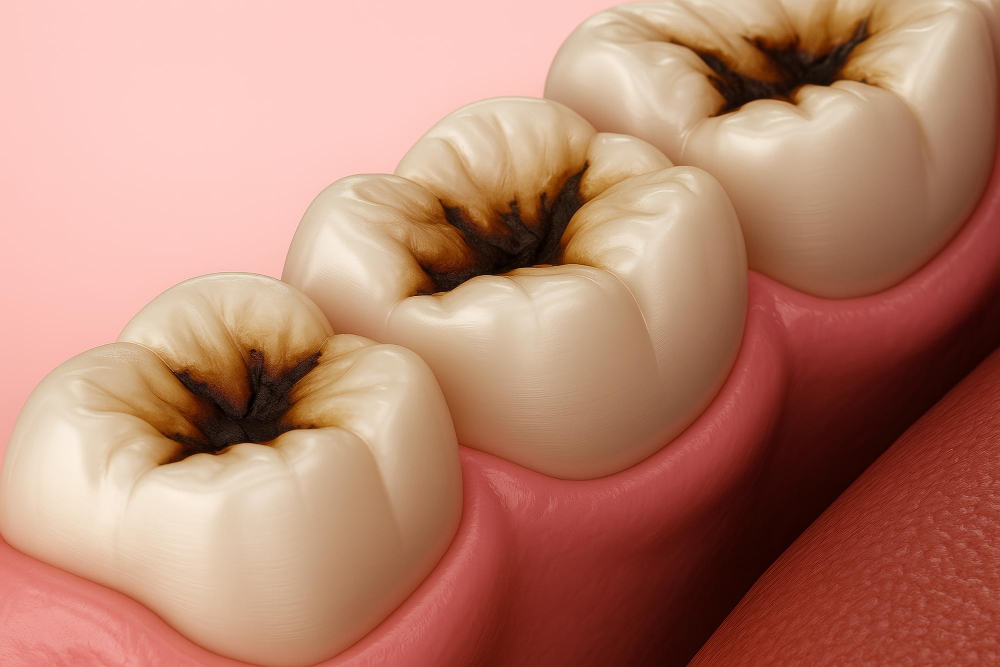
What Are Cavities?
Cavities are small holes that form in your teeth. They are also called tooth decay or dental caries. Cavities happen when the hard surface of your tooth breaks down. This is a common problem for people of all ages. In fact, cavities are one of the most common dental issues worldwide. Good oral health can help prevent them.
Causes of Cavities
Cavities develop over time. First, bacteria in your mouth feed on sugars from food and drinks. Then, these bacteria make acids. Over time, the acids wear down the tooth’s surface. As a result, a cavity forms. Several factors can increase your risk of getting cavities:
Common Symptoms of Cavities
Sometimes, cavities do not cause pain at first. However, as they grow, you may notice signs. For example, you might feel pain when eating something sweet or cold. Other cavity symptoms include:
If you notice any of these symptoms, it is important to see a dentist soon. Early treatment can stop the cavity from getting worse.
How Cavities Are Diagnosed
Dentists can find cavities during a regular check-up. First, they look at your teeth and gums. Next, they may use a small mirror to see hard-to-reach areas. Sometimes, dentists use X-rays to spot cavities between teeth. X-rays help find tooth decay that is not visible to the eye. Early diagnosis makes treatment easier and less painful.
Treatment Options for Cavities
Treating cavities depends on how severe they are. For small cavities, a dentist may use a filling. This means they remove the decayed part and fill the hole with a special material. For larger cavities, other treatments may be needed. These include:
After treatment, your dentist will give you tips to prevent new cavities.
Prevention Tips and Lifestyle Guidance
Preventing cavities is easier than treating them. You can protect your teeth by following these simple steps:
With good oral health habits, you can prevent most cavities. Even so, regular dental visits are important for everyone.
When to See a Dentist
If you have tooth pain, sensitivity, or see a hole in your tooth, make an appointment with your dentist. Early care can save your tooth and prevent more problems. Even if you feel fine, regular check-ups help catch cavities early.
Conclusion
Cavities are common but preventable. By understanding the causes, symptoms, and treatments, you can take steps to protect your teeth. For the best advice on cavity prevention and treatment, consult a dentist. Your smile is worth it!