
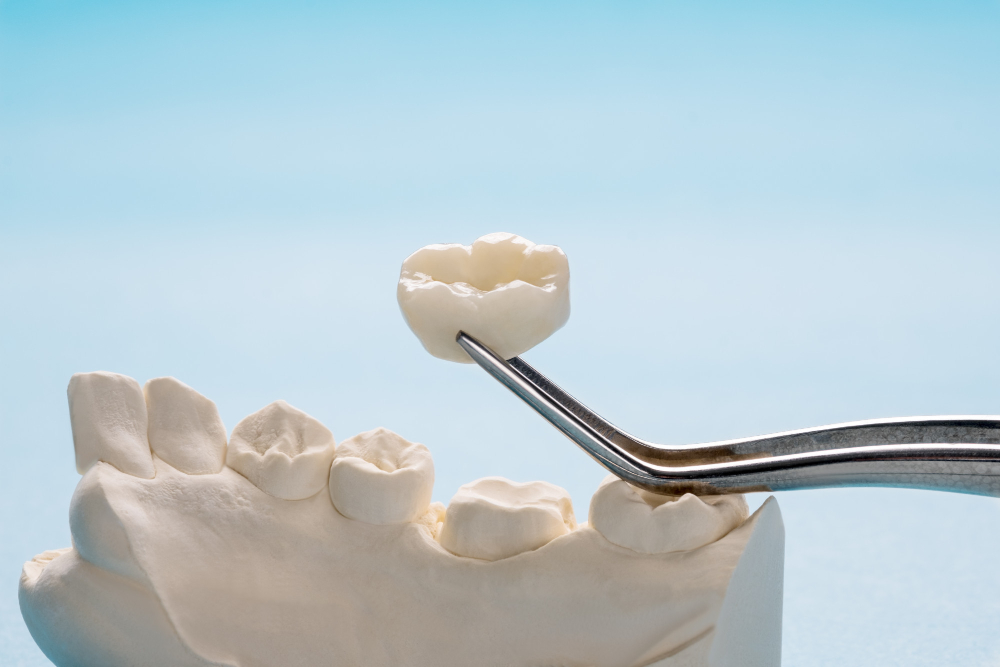
What Is a Dental Crown?
A dental crown is a tooth-shaped cap. Dentists place it over a damaged or weak tooth. This dental restoration helps protect, cover, and restore your tooth’s shape. Often, crowns are made from porcelain, metal, or ceramic. They look and feel like your natural teeth. Because of this, many people choose crowns for tooth repair. According to the American Dental Association, crowns are a common way to save teeth that might otherwise need removal.
Reasons for Getting a Dental Crown
There are several reasons why your dentist may suggest a dental crown. For example, you might need one if you have:
In many cases, crowns help restore your smile and chewing ability. Sometimes, they also improve the look of your teeth.
Step-by-Step Dental Crown Procedure
Usually, the dental crown procedure takes two visits to your dentist. Each step is important for a strong and lasting result. Here is what you can expect:
Because each step is done with care, your crown should last for many years.
What to Expect During Each Visit
During your first visit, your dentist will numb the area around your tooth. This helps you stay comfortable. After shaping your tooth, you may feel some pressure, but not pain. The dentist then takes an impression and places a temporary crown. This crown protects your tooth until the next visit.
At your second visit, your dentist removes the temporary crown. Then, the dentist checks the fit and color of your new crown. If everything looks good, the dentist cements the crown onto your tooth. Most people feel little to no discomfort during this step. However, your dentist will make sure you are at ease throughout the process.
Aftercare and Recovery Tips
After your dental crown procedure, you can usually return to normal activities right away. However, you should follow these tips for the best results:
With good care, your crown can last 5 to 15 years or more. Regular dental check-ups help keep your crown and other teeth healthy.
Potential Risks and How to Prevent Them
Like any dental treatment, a dental crown procedure has some risks. For instance, you might feel sensitivity to hot or cold foods. Sometimes, the crown may become loose or fall off. Rarely, you could have an allergic reaction to the crown material.
To lower your risk, follow these steps:
Because your dentist uses safe materials and careful methods, most people have no problems with their crowns. The American Dental Association recommends regular care to keep your crown in top shape.
In summary, a dental crown procedure is a safe and effective way to restore your tooth. If you have questions or concerns, consult your dentist to learn if a dental crown is right for you.